A museography lesson from Glasgow
Introduction: a museography lesson from Glasgow
Museography: the techniques, methods and practices involved in designing and organising museums and exhibitions.
What does that have to do with my work as a translator, language specialist, and designer of organisation systems?
Let me explain.
About twenty years ago, I lived in Glasgow for just over two years. This historic city is also vibrant with culture. I went out every week: museums, exhibitions, meals out with friends, walks in the surrounding countryside. I'd never experienced such a buzz before, and I've never found that feeling again since. Even less the one I felt when I first discovered the Burrell Collection, nestled in the heart of Pollok Park.
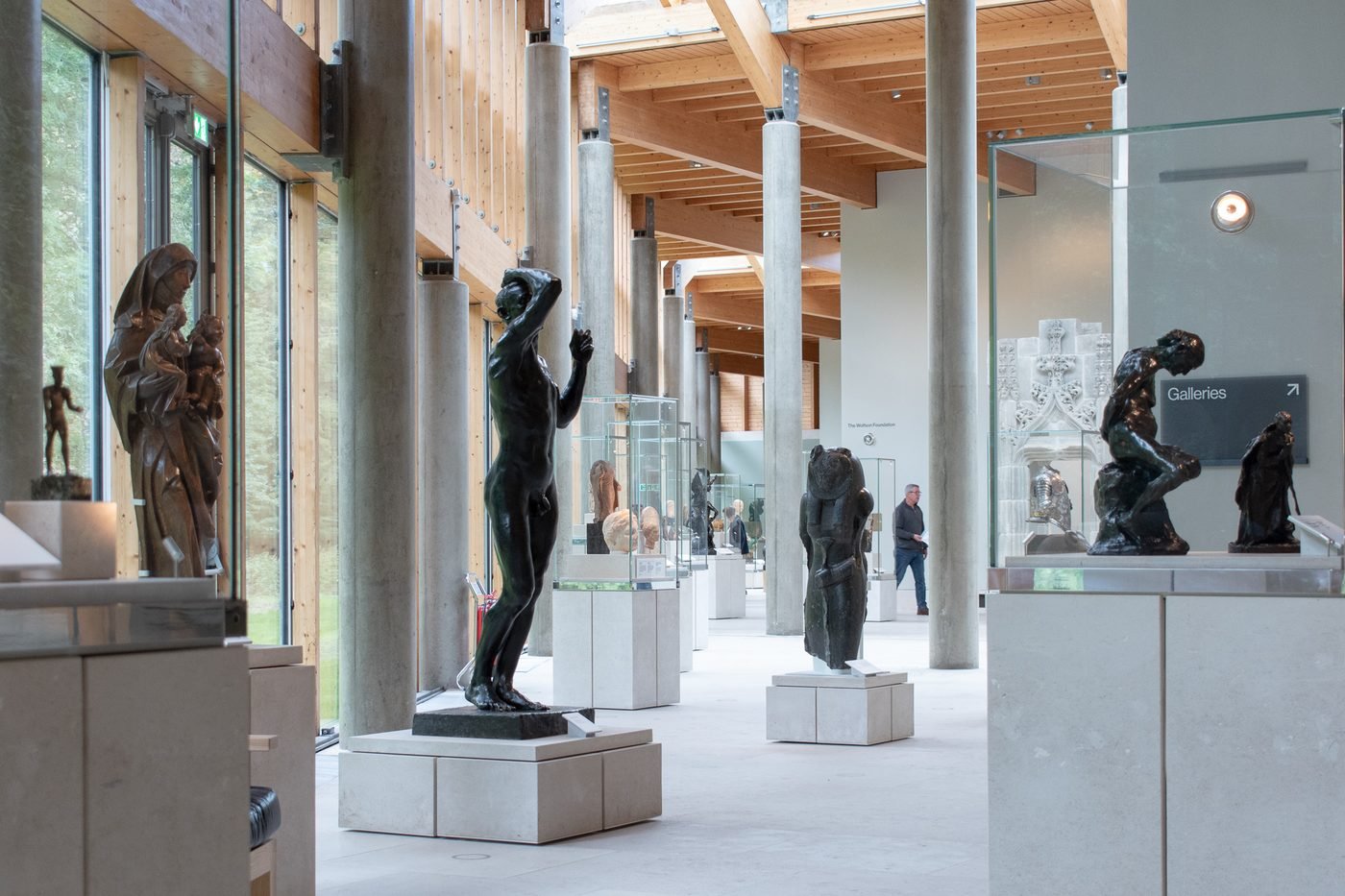
Comprising nearly 9,000 objects, this eclectic collection is housed in an L-shaped building designed by John Meunier, Barry Gasson and Brit Andresen in the early 1980s. What makes it special? It was designed around the collection, even incorporating medieval arches into the stonework of its entrance.
Visit after visit, the Burrell Collection showed me that museography isn't just about displaying works, but about building for them a setting that gives them enough space to exist fully.
Above all, the many weekends I spent there taught me to look at the space between things: the gap that makes what's precious stand out, almost physically.
What I mean by precious (and why the word matters)
For me, precious doesn't mean rare or expensive. It means objects or documents gathered with love, care and curiosity: moments of life, ideas, traces of aesthetic movements, sometimes one-of-a-kind pieces.
Their value comes from the bond we form with them and from how we bring them together (in a museum, as in an organisation system).
Beauty, emotion, history, security: four kinds of value
In the classification system I'm developing, I focus on needs and goals.
The value I give an image or a PDF is inseparable from the need I have for it:
- Aesthetic: useful when you work in visual industries (branding or design).
- Emotion: an intimate revealer (what excites us, what soothes us, what draws us in). It's the basis of my "Inspiration" category.
- History / memory: a link to an era, a path, a story (our own or someone else's). I find it in the databases I use to manage my notes, my mood or my journal.
- Security / finance: material value can matter, or it can come from ideas and living conditions that protect our stability. That's the principle behind one of the foundational categories of my system, the "Secure" section.
Who is the visitor (in life, or in an organisation system)?
When I started building dashboards in Notion, I did it for my own use, to learn the tool or simply for the pleasure of creating.
I never really thought about designing spaces for other people until the urge to launch my own brand took hold.
In a museum, we don't look at things the same way depending on our energy, our time, how familiar we are with the subject or our attention span.
In a living organisation system, it's the same: I have to design for real use, which varies with rhythm, needs or possible tiredness.
All these questions inspire me every day, and I haven't found a better spark than museography to set my research alight.
My favourite works… and what they reveal
William Burrell, a shipping magnate, collected everything he could lay his hands on. He made no distinction between ancient vases, carved wooden statues of saints and Middle Eastern carpets.
I'm not necessarily one to say "everything is beautiful", but I do think what makes a work precious is the relationship we have with it… and the place we give it.
Rodin (The Age of Bronze): an emotional certainty
The work that moves me most at the Burrell is the cast of Rodin's The Age of Bronze, my favourite statue in the whole history of art.
Even though its placement has changed since my last visit, it's still carried by its setting: the courtyard, the greenery, the immense Warwick Vase next to it, from the Emperor Hadrian's villa.
In Nice, my home town, one cast stands silhouetted against a window. In Berlin, it's green, set high up, enthroned among the Impressionists. In Bergen, it has left the staircase of KODE 4 to be displayed in the shop window, where reflections on the glass sometimes make it hard to see. At the Victoria and Albert Museum in London, it's displayed "with friends", among many other statues.
Collecting the places where I've seen The Age of Bronze has made me think about the importance of environment and setting.
Sekhmet, Princess Cecily's stained glass, Degas, Luohan: stories to tell
I also stood in awe before a head of Sekhmet, a presence so smooth and yet so dense that it makes you want to run your hands over it.
I'm also thinking of a stained-glass panel of Princess Cecily, of which I've kept a postcard, a painting by Degas and a Luohan. This one has a particular feature: it bears a signature that also appears on another Luohan at the British Museum. That continuity prompted me to do a little detective work during a trip to London.
And there's another medieval mystery to solve during the visit. The museum displays several depictions of one of Jesus's disciples with undeniably feminine features, like a hidden storyline that would make any Dan Brown fan smile. I remember a guide who took great delight in pointing it out, which made me think about the importance of staging and storytelling.
When art looks contemporary (and when it gives away its limits)
To end on a lighter note: out of context, some Egyptian pieces look incredibly contemporary. I remember a friend who was a volunteer guide at the museum comparing an Egyptian dish to a model you could buy at IKEA.
The paintings, too, show figures who look like us: we recognise ourselves in them more than we sometimes admit.
At the same time, the historical context gives itself away in almost comical details: animals in tapestries (elephants, whales, lions) are so distorted they seem invented, as if the artist had never seen one in their life. Which was probably the case.
That distance from reality doesn't cancel out the artistic quality: it makes it more interesting, and raises questions about how art communicates.
The collection first: a building designed for the works, not the other way round
Exploring the Burrell doesn't mean entering a building that happens to house art: it means stepping into a shell designed around an existing collection.
A concrete example: the stained-glass gallery
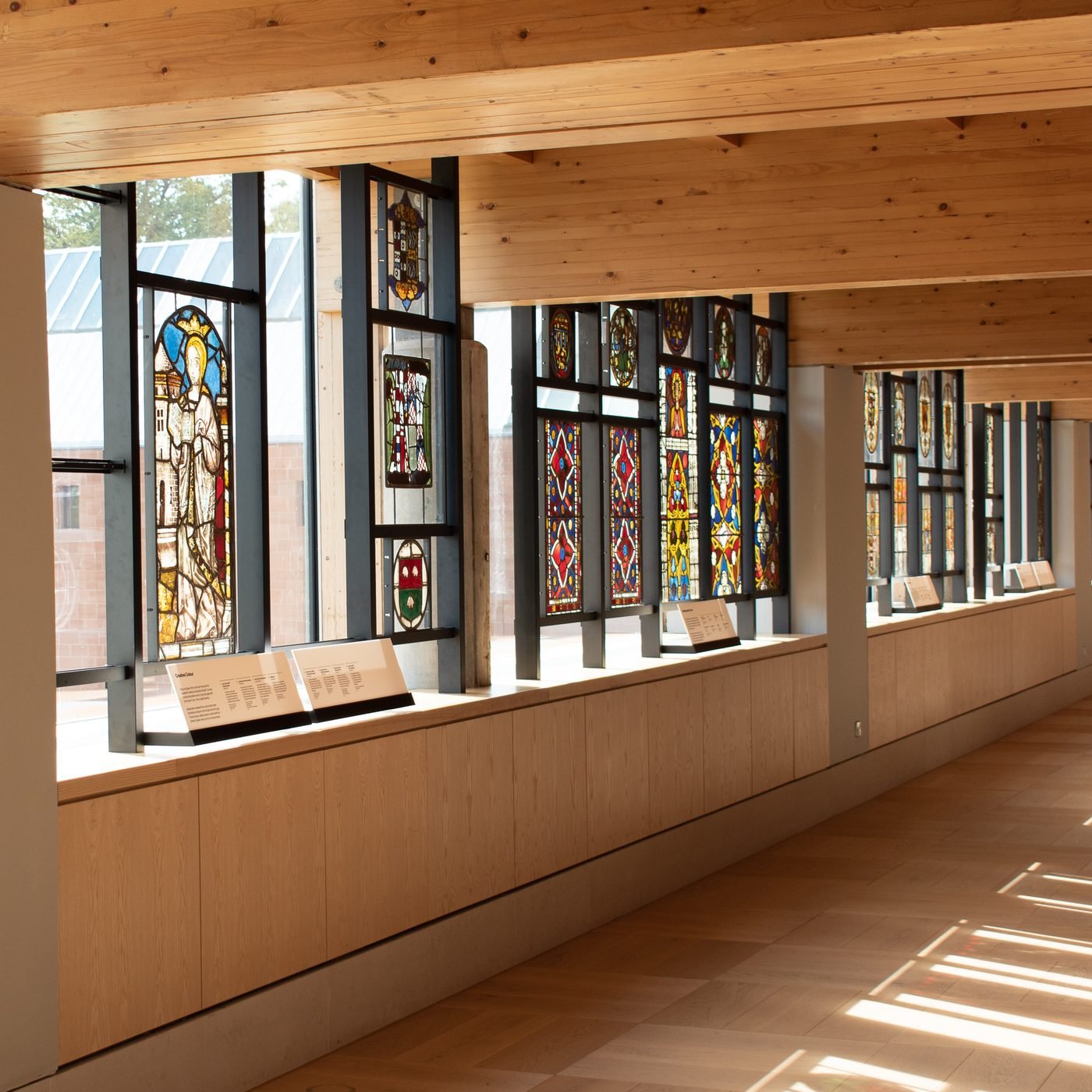
The stained-glass gallery is, for me, the most telling example: it lets the sun through, but it also has blinds for when the light gets too strong. You can literally see the dual intention: to show and to protect. It isn't a compromise: it's staging that embraces conservation.
Mixing eras without a false note
When space is well balanced, you can play with contrasts.
In the collection, pieces aren't scattered here and there for shock value: they're chosen so they don't smother each other. So a minimalist plate can sit next to a carved medieval doorway without overloading the eye, because the distances absorb the contrast.
There's still a route: conservation constraints and classification choices
Of course, not everything is deconstructed, and there is a route: some objects have to stay in cold storage; the few paintings hang upstairs, arranged by period.
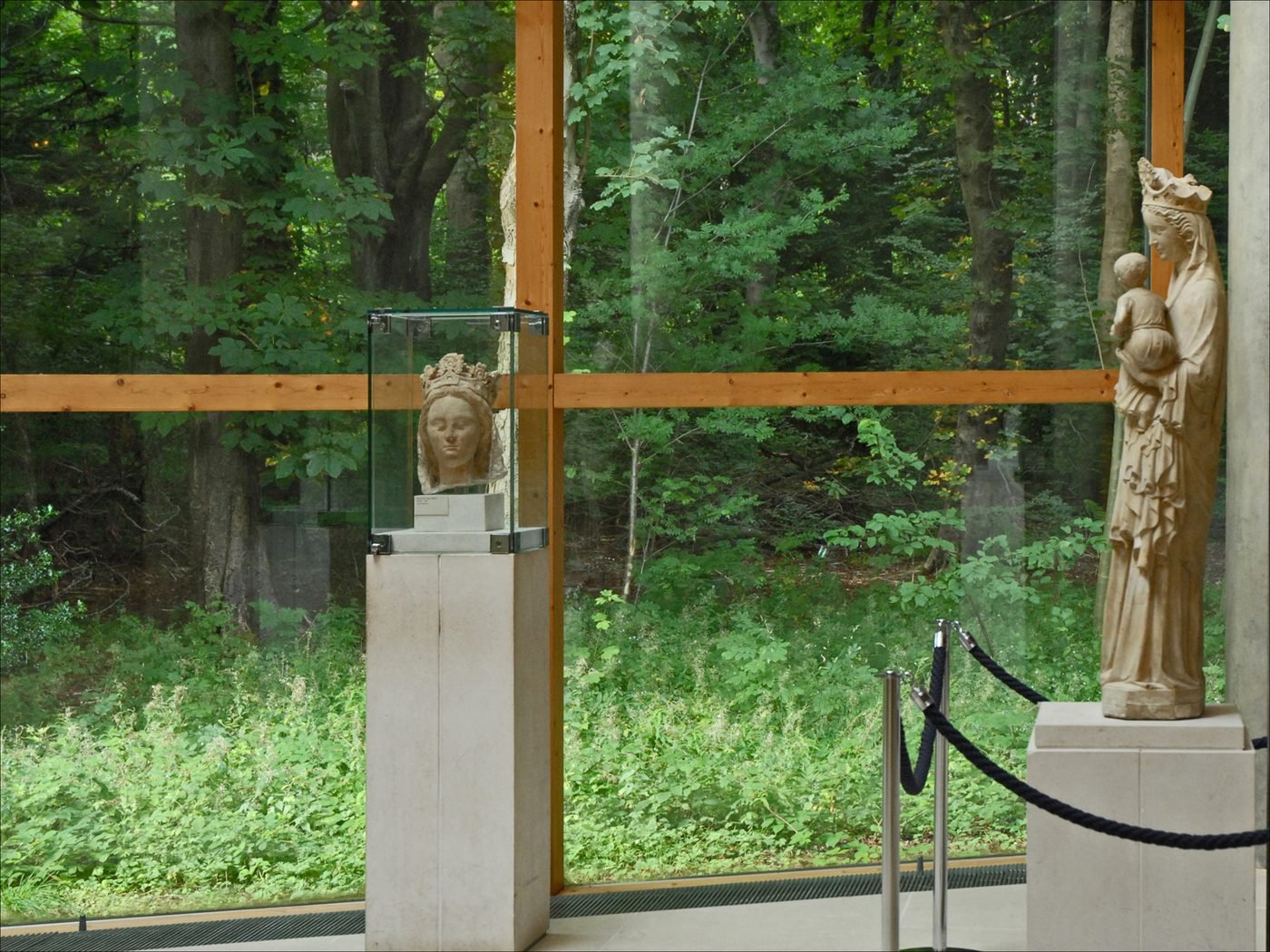
But as soon as you enter the North Gallery, which opens onto the park, something else takes over: the beauty of the place. Exploring the art becomes almost a pretext for rediscovering nature beyond the glass walls… and that's precisely where museography does its work, by creating a unique experience of art.
What this model allows… and what it limits
I don't believe in a simple hierarchy: "the collection first" isn't superior to narrative museums or to museums where the building is the star.
It's another way of organising attention.
It allows a freer, more personal relationship, and it also has limits, especially when it comes to renewing a space designed for a relatively stable collection.
Why I didn't feel frustrated in more traditional museums
In fact, I felt no frustration at the British Museum, the Victoria and Albert or on Berlin's Museum Island.
I also love the moments when museums tell a story.
I'm thinking, for example, of displays where Hadrian and Antinous are placed face to face.
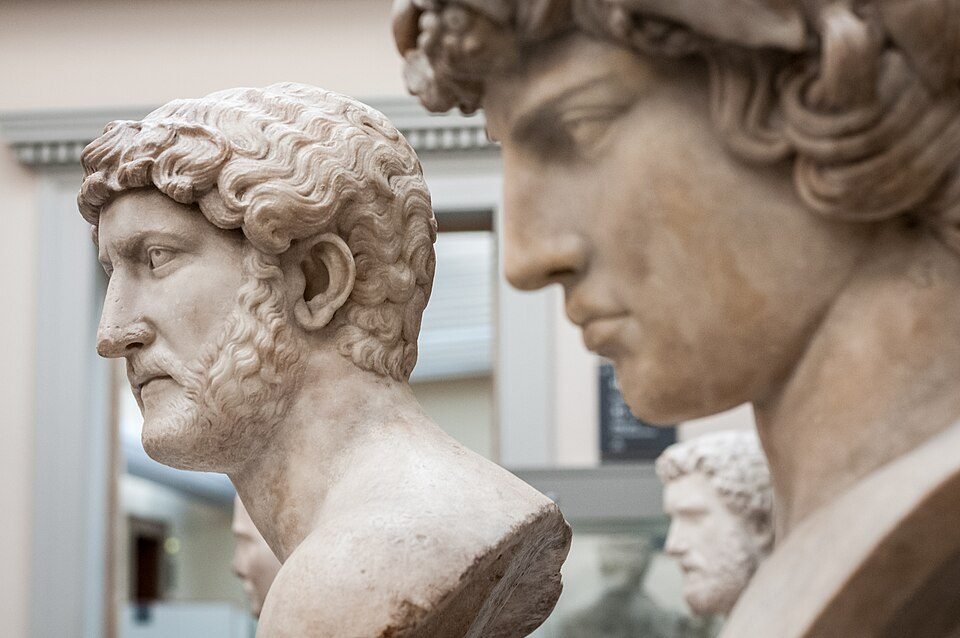
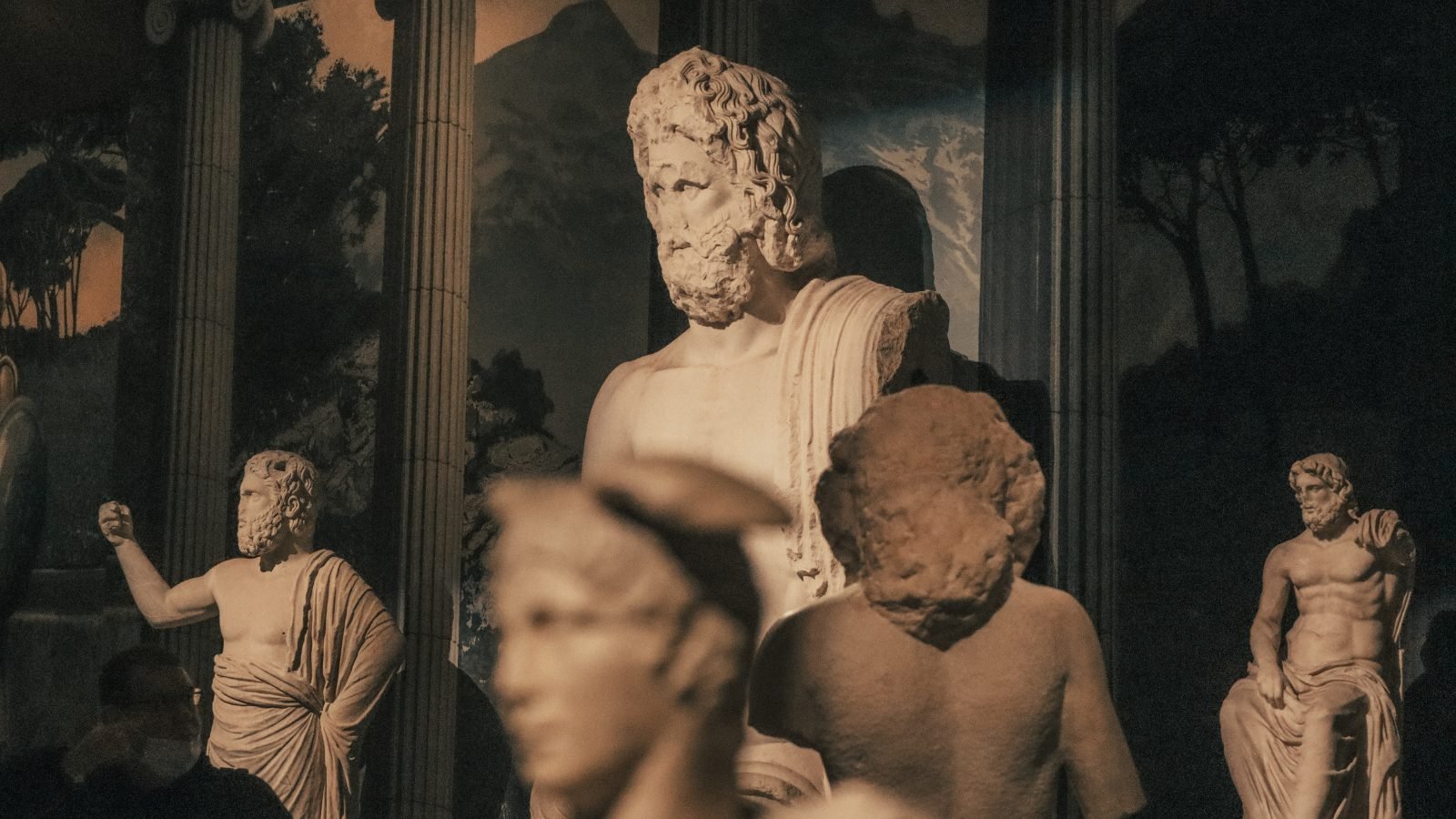
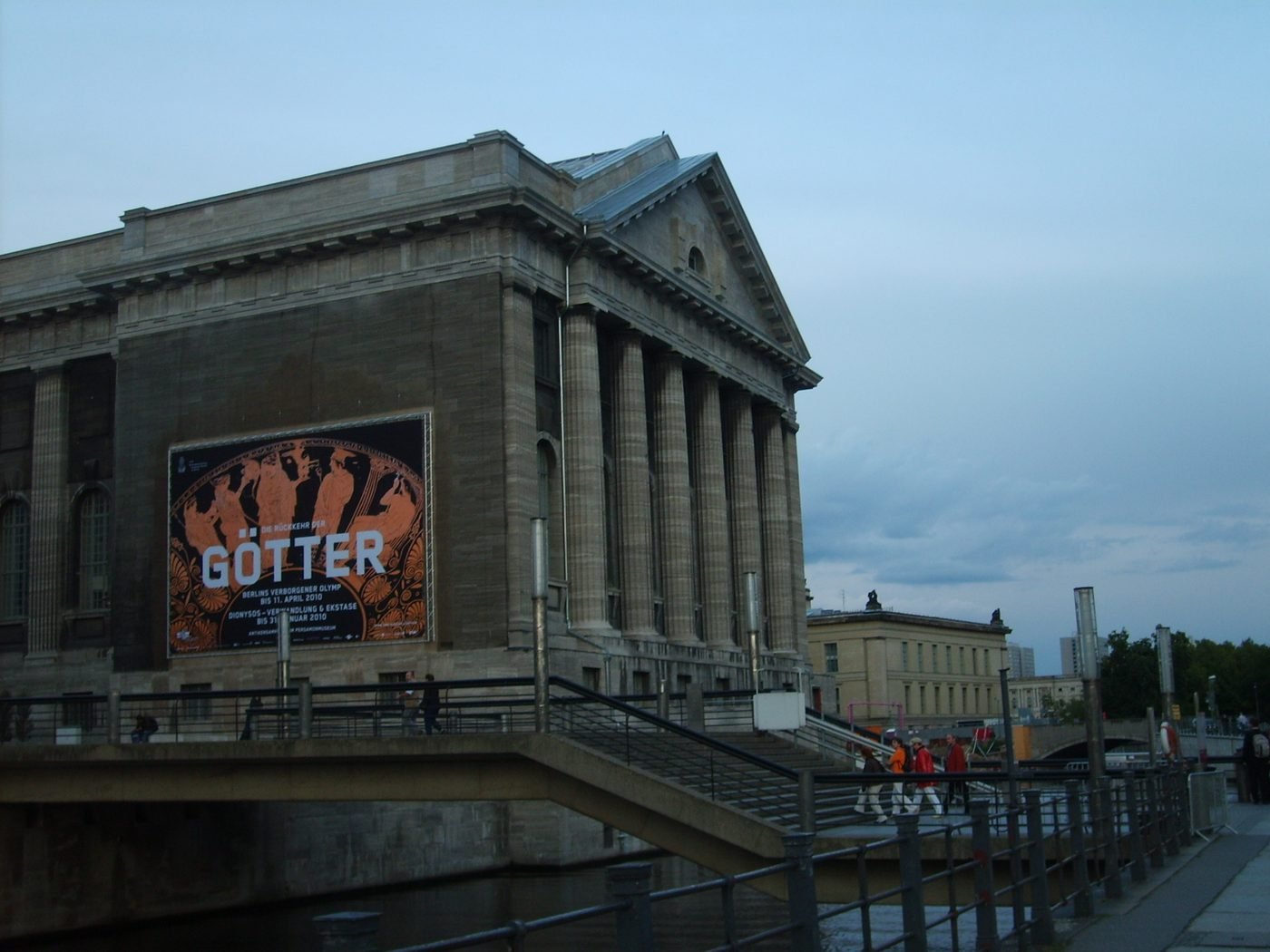
I can still picture a scene at the Pergamon Museum in Berlin, during the 2009 exhibition "The Return of the Gods" (see my photo below): I walked into a room, spotted a bust of Hadrian and followed his gaze, certain it would eventually land on the statue of his lover.
There are also museums I've only visited once, like the Marc Chagall Museum in Nice or the Old Masters Museum in Brussels. Fortunately, the works on display there were limited to one artist, one period or one medium, otherwise I wouldn't remember a thing.
One limit: renewing spaces (and the role of temporary exhibitions)
Here's a practical lesson: when you build around an existing collection, incorporating elements into the very fabric of the walls, you have to accept that you can't renew the spaces as often as you'd like. (In many ways, that's true of more traditional museums too.)
Hence the importance of spaces for temporary exhibitions: areas where you can move things, try, reconfigure, without touching the core.
That's a very concrete idea when you think about your own workspaces, where it's useful to plan a sandbox, a space for trying and testing.
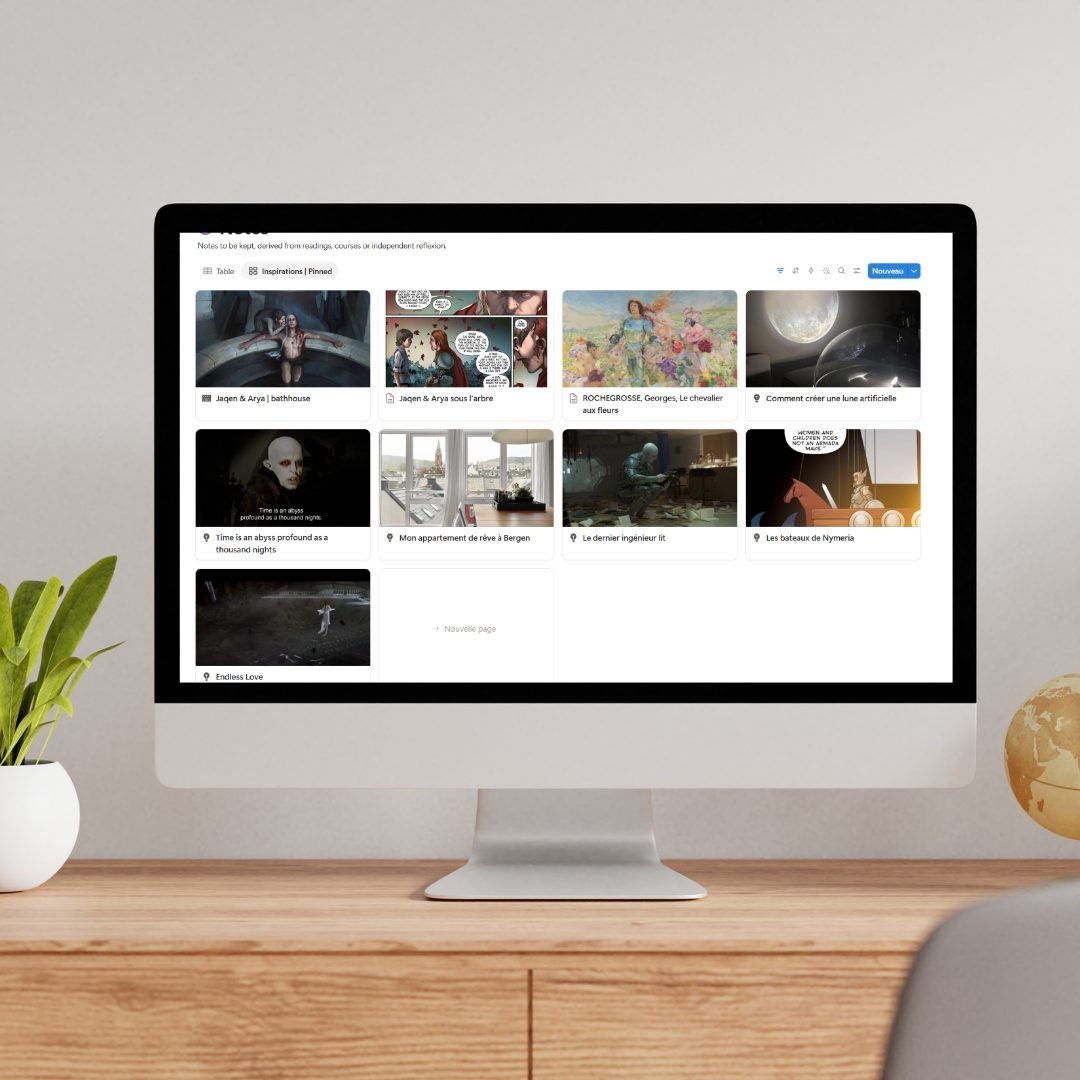
In my case, my "Inspirations" view hosts a temporary exhibition of my current visual inspirations.
The real lesson: the value of the gap
What I really bring back from the Burrell is a simple idea: a piece's value also shows in the space around it. The gap isn't useless emptiness, but a condition of perception.
It's sometimes said that an essential part of music is the silence between the notes. Here, it's the same: the air between the works brings out their glory.
It's the same in my Notion dashboards. I like to give elements room to breathe and not to overload my spaces.
Space that breathes: no overload, letting the eye and the body move freely
My philosophy as a budding designer: attention needs emptiness to approach and recognise what matters. Because when every element becomes visible and legible, it's useful and actionable.
Conclusion: design showcases, not storerooms
That's how the Burrell Collection introduced me to museography, which in turn has deeply influenced the way I design workspaces in Notion, and also the creation of my own classification system, in which I carry museography over into professional and personal organisation. I introduce the methods that inspired it in my article Classification systems for getting organised.
I also put this talent for presentation at the service of cultural institutions and publishers: I'm a translator specialising in culture and publishing, from English and Norwegian into French.
Are you preparing an exhibition, a catalogue or a visitor guide? Discover my services and my background, then write to me at hello@angeliqueolivia.com or on LinkedIn.

Angélique Olivia MoreauLinguist and translator based in Bergen, Norway — building bridges between languages, culture and the way we organise our lives.