Living and translating in Norway: what nobody tells you
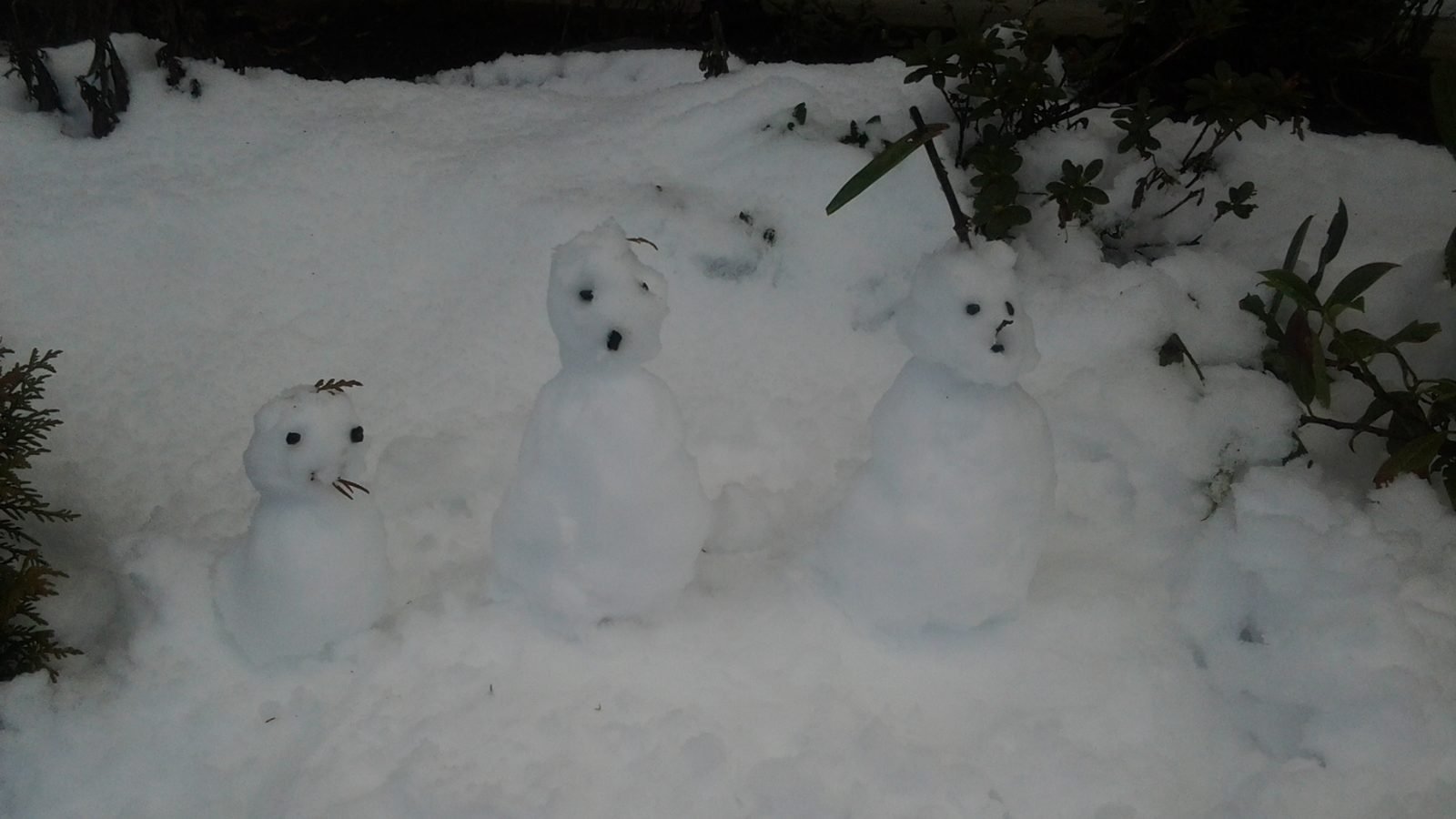
Here is the final episode of my series “More than half my life in foreign languages”. In the previous episodes: my first move to the Shetland Isles, my years in Glasgow and how I learnt Norwegian, up to C1 level.
This time, I tell you how I became a translator in Norway, and share the less picture-postcard side of life here: winter, social codes and food.
Becoming a translator in Norway
For years, I had dreamed of starting my own business, and language services always came top of my brainstorming sessions.
I had the skills, enough savings to give myself time to get started, and a day job that paid the bills.
For the record, I was working as a sales assistant at Søstrene Hagelin, a fishmonger and deli founded in 1929, now almost a hundred years old and one of Bergen’s best-known names.
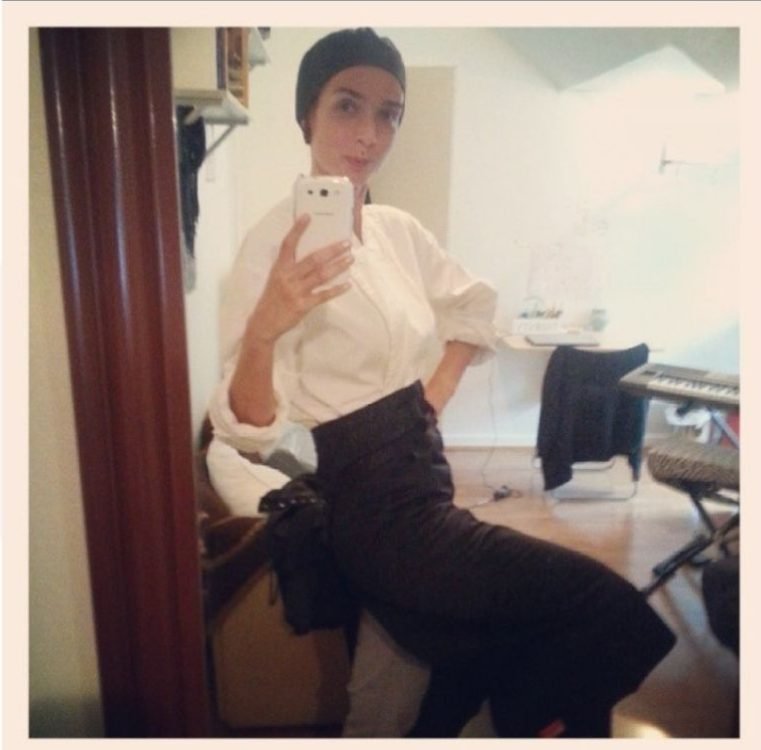
I worked about eight hours a day, spent my evenings at the university library revising for my upcoming Norwegian exam, then went home to my little attic flat in Landås, one of those working-class neighbourhoods that the arrival of the light rail has since gentrified somewhat.
Then one day, everything broke.
For several years, I had been dragging around a feeling of depression like a ball and chain, with hormonal problems and still no clear idea of how to manage the mental load heightened by my neurodivergence. I had tried to make up for the income I had sacrificed during my volunteering year by piling up small jobs: canteen manager, cleaner, babysitter, café worker and, when needed, library assistant. In Dale, I often worked more than 50 hours a week, with peaks of 60 or 70, on top of which I added workouts and, of course, several kilometres of walking a day to get home, at the top of the hill, sometimes through snow up to mid-calf.
When I got to Bergen, I barely slowed down.
It all collapsed one morning, in front of the kitchen oven: completely exhausted, I could no longer stand up.
Burnout had hit me full force.
Without going into detail, medical tests revealed a physical problem that meant several months of waiting for a first procedure, then almost another year for more serious surgery.
In the meantime, during my sick leave, I took stock and decided to go back to training and slowly build an online presence to offer language services: translation and copywriting. It took me a few months to find regular clients, but it was the start of my business, then called Harrespil (a Basque word for a stone circle, a nod to my passion for heritage and ancient history).
Even today, I still live with the after-effects of chronic fatigue, although I am clearly on the road to recovery.
The training I took in 2020 to become a neuro-linguistic programming (NLP) practitioner, my journaling practice and my move towards minimalism have helped me drastically reduce my mental load while defusing patterns that were holding me back. Since then, I have been living better.
From English and Norwegian into French
Over the years, I became more professional.
I took courses to manage my business better.
Using computer-assisted translation software became essential. When the time came, I chose Trados.
The work has been varied and has evolved with the market:
- copywriting for an educational platform offering online courses
- SEO copywriting for sales pages, blog posts and product descriptions
- a specialisation in fashion, after in-depth copywriting assignments and several courses, including the INSIDE LVMH certificate and a several-month programme on the fashion world with Condé Nast, the publisher of Vogue, Vanity Fair and Glamour
- literary translations from English, which led to a contract for five Norwegian books
- some technical translations
The arrival of AI has shaken up quite a few certainties and confirmed others.
As I have a certain knack for creating systems, I have earned several Notion skills badges, and I am currently taking a Master’s in AI & Innovation with TranslaStars. Its modules, which I find fascinating, confirm my use of processes that make my daily work easier, without erasing my expertise.
Finding my place in the profession
Because of my health problems, but also because virtual meetings don’t put me off, my professional network reaches beyond Norway’s borders.
I have joined several professional associations. The one I currently belong to is Tekstallianse, an association of writing professionals founded in Bergen, in the west of the country. It organises all kinds of events, including Zoom meetings that I attend from time to time. It’s a precious hour for meeting people from many professions: writing, translation, organising cultural events…
The language immersion of my early years in Norway gave me access to certain codes. I know Norwegian customs; I understand the way of life. Beyond words, this is an important part of my work as a linguist.
That said, it was important to me to stay in touch with my target language, French.
I listen to podcasts, read novels, and sometimes watch an episode of a series or a YouTube video to keep up with everyday expressions.
Everyday life in Norway: what nobody tells you
Now for a few confessions, if you’ll allow me: beyond the picture-postcard fjords, Norway has some less famous, more disconcerting sides.
Rain, light and winter
I won’t pretend I didn’t suffer from the winter conditions when I lived in Dale.
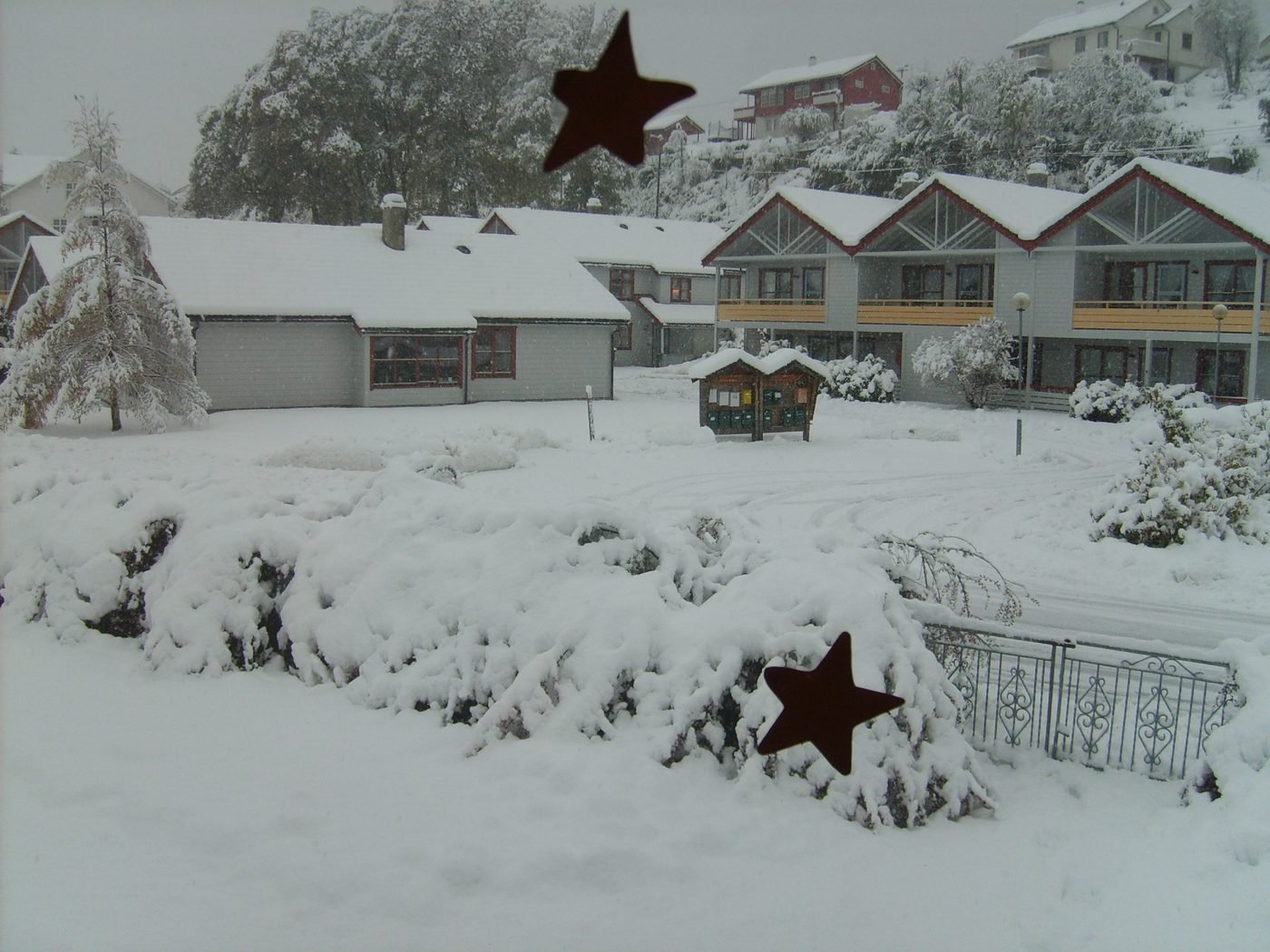
Temperatures drop fast, and the wind amplifies that feeling of absolute cold.
As Norwegians say: Det finnes ikke dårlig vær, bare dårlige klær. Roughly: there’s no such thing as bad weather, only the wrong clothes.
In practice, as soon as the snow arrives, you have to slip a kind of elastic fitted with spikes over your shoes, a bit like climbing gear. They are called brodder. There are all kinds: for walking, for running, for more extreme sports.
Day to day, as soon as it freezes, I walk like a penguin, with or without my brodder. I admit it’s one of the reasons I wonder about my future in Norway, especially as age won’t improve my mobility. I have never slipped and fallen as much as since I have lived here, and it’s a feeling I particularly dislike.
And to prove I’m not exaggerating, here’s what the stairs of my building can look like for several days in the middle of winter.
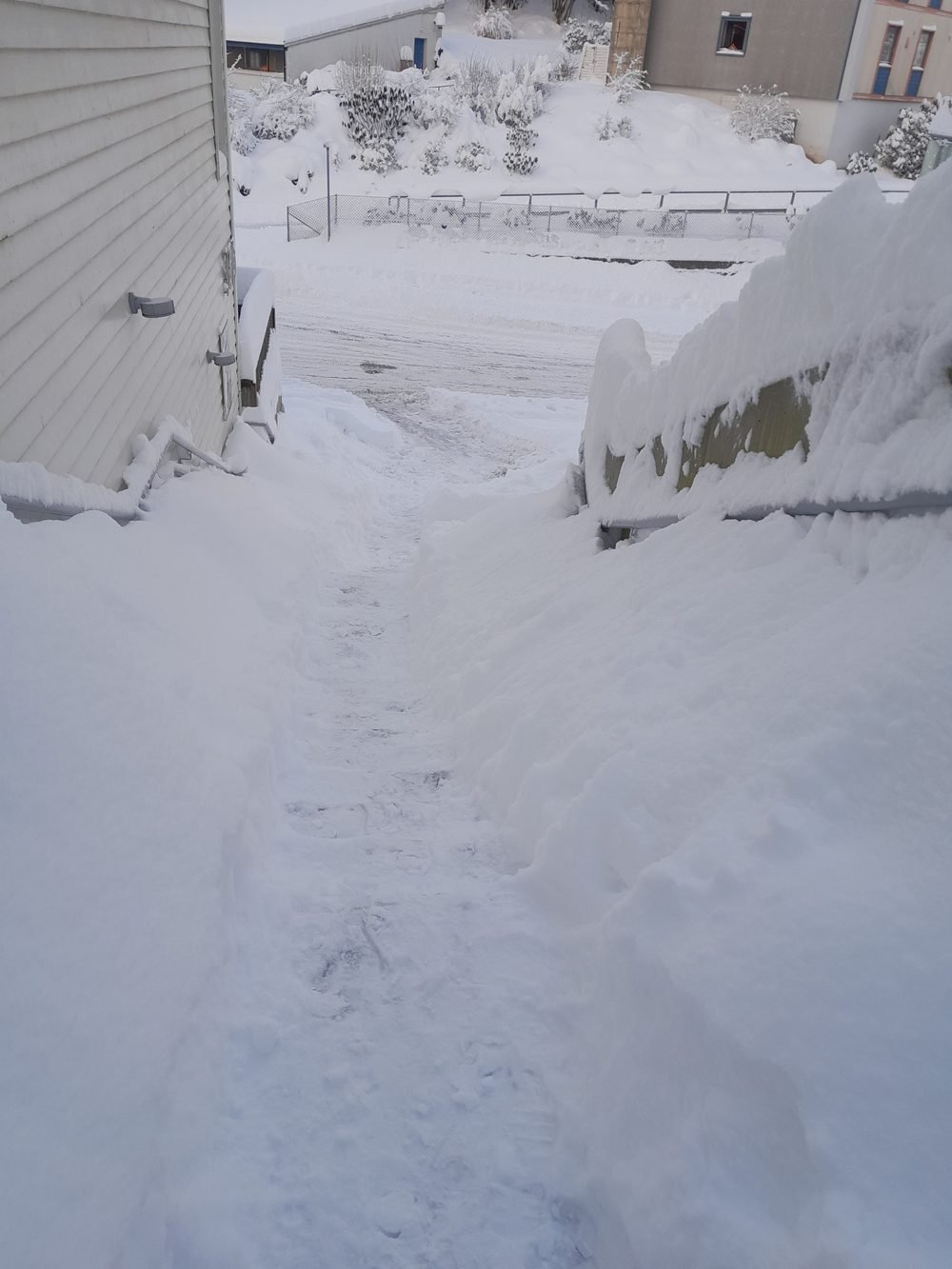
One upside, though (well, it’s relative): Bergen’s rainy climate goes hand in hand with fairly mild temperatures. Snow usually turns very quickly into slush, a half-frozen mush on which spikes have no grip at all.
Add to that the darkness.
Personally, I fight it with vitamin supplements such as Floradix or Sana-sol (a Norwegian classic), and I have switched my light bulbs to a warmer light.
Social codes and Norwegian friendships
Where my experience probably differs from that of many expats, tourists or immigrants in Norway is that I began my stay in a village where everyone knew each other. What’s more, my volunteering took me to several places in the municipality: the library, the cultural café, the care home, the lower secondary school and one of the two nurseries.
As I am very private myself, I didn’t suffer from the natural distance Norwegians keep from others, and I had no trouble making acquaintances. On top of that, dugnad, those voluntary community work days that can bring together everyone in a neighbourhood, gave me the chance to meet even more people.
Norwegian food through French eyes
In the Glasgow episode, I told you about my love of British food. I wouldn’t be quite so positive about Norwegian food, with a few exceptions, all the same.
What I adopted… or not
Fish is one of the staples of my diet. My brief stint as a fishmonger made me fall in love with fiskekaker, those little fish “cakes”, often heart-shaped, that you eat on the go or with vegetables and sauce for a light lunsj.
When I worked at the café in Dale, I also made skillingsboller, big cinnamon rolls, every morning.
On the other hand, I never took to the Christmas specialities. Pinnekjøtt and ribbe? No thanks. I have unpleasant memories of my first December in Norway. I walked into my local Kiwi (a discount supermarket chain, a bit like Lidl) and a smell of rotten meat (at least, that’s how it struck me) caught me by the throat straight away. A whole pile of meat that had been dried for more than six weeks sat enthroned in the middle of the shop. A friend who felt the same and I joked that until the end of the holidays, we would have to crawl through the aisles with a handkerchief over our noses to do our shopping.
Still, I tried rakfisk once and loved it. Fermented fish… it goes to show it’s worth a try.
A dairy-free table
That said, all my culinary bearings are being turned upside down at the moment.
As I have been trying for years to ease the symptoms of my chronic fatigue, I have experimented a lot with my diet, and I finally cut out all forms of casein.
Within a few days, I no longer suffered from chronic inflammation, and my pain had almost disappeared!
Fortunately, Norway has plenty of plant-based milk alternatives. The Belgian brand Alpro is widely available here, as are Sweden’s Oatly, Italy’s Valsoia and Norway’s own Berit. Long live international trade!
More than half my life in foreign languages
Today, I can’t imagine my life without four languages every day, whether for pleasure or for work.
Living in a country that isn’t your own and communicating in another language is hard, admittedly, but it is an extremely enriching experience, the one I dreamed of as a child.
From Spanish lessons to the Shetland Isles, from Glasgow classrooms to the dialects of Sunnfjord, every stage taught me what no textbook can: you learn a language by living it, you make mistakes (sometimes herrings from hell), and one day you catch yourself dreaming in it. Norway also taught me to slow down, sometimes in spite of myself.
All those years between languages are now at the heart of my work. When I translate from English or Norwegian into French, I don’t just carry words across: I convey habits, a sense of humour and ways of life that I know from the inside.
If you have a translation or copywriting project, you will find the details of my work on my services page, and you can write to me at hello@angeliqueolivia.com. To follow the rest of my adventures, linguistic or otherwise, find me on LinkedIn and Instagram.
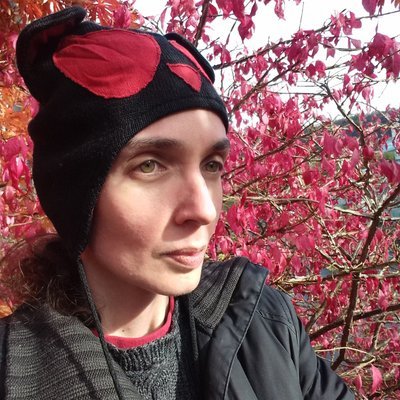
Angélique Olivia MoreauLinguist and translator based in Bergen, Norway — building bridges between languages, culture and the way we organise our lives.